paper.dinq.meAI 与前沿科学顶会 · 学术新星雷达
登录 DINQ
返回新星榜
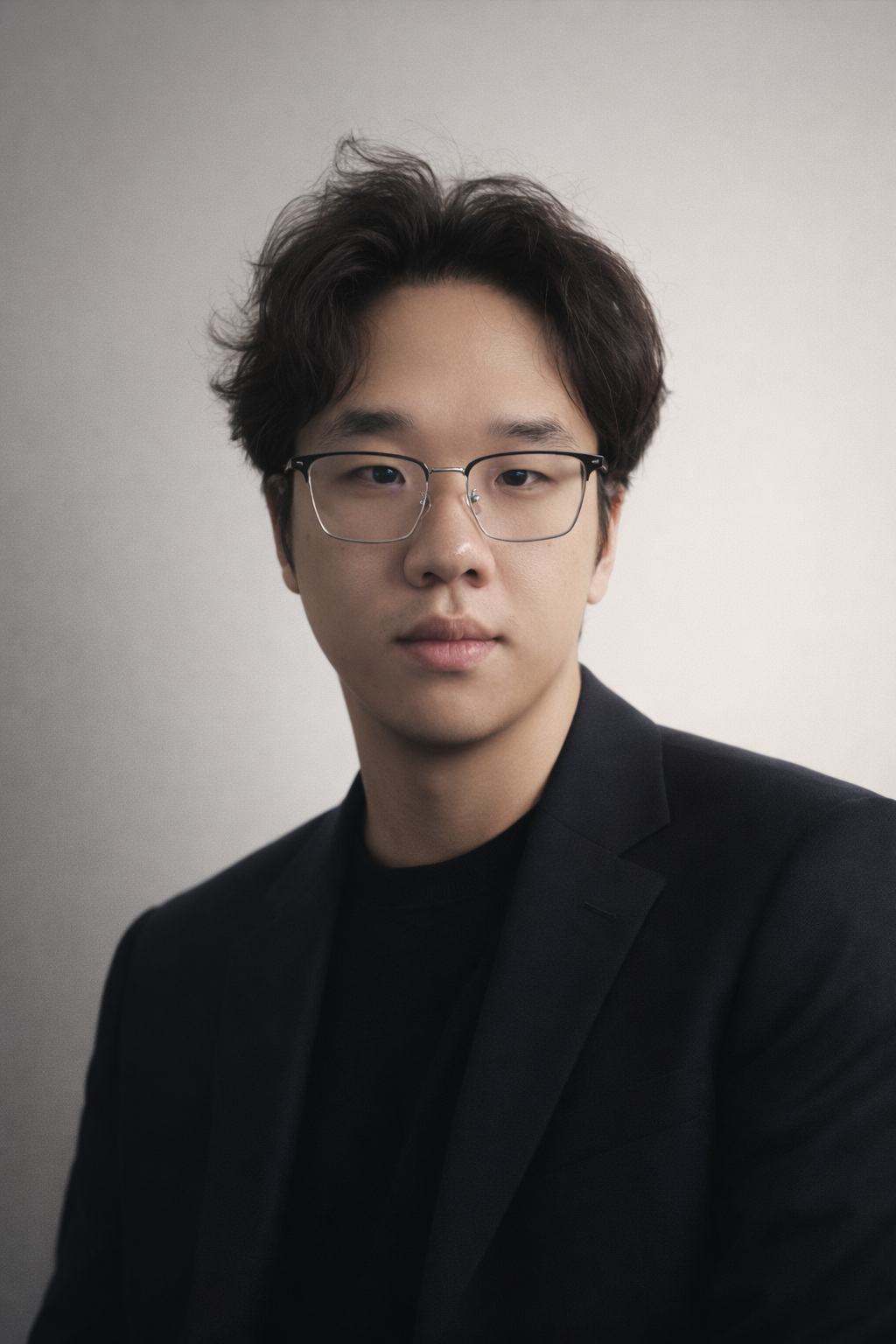
ZYZhengqing Yuan

Zhengqing Yuan

COLM 2026×3ICLR 2026检索与知识效率与系统评测与基准对齐与偏好多模态
新星分新星
90
一作贡献100
核心/参与5
方向广度13
合作网络9
3 一作 · 4 篇 · COLM 2026 / ICLR 2026

获取完整研究档案

首次获取该候选人的完整档案及 StartLux 评估共 20 积分;每位用户单独解锁,之后查看免费。主动刷新 20 积分。

联系方式

实时查找电子邮箱,费用不超过20积分;未找到邮箱不扣费。

2026 顶会论文

4
一作COLM 2026Poster· Poster Session 1· Imperial Ballroom· #46

MegaTrain: Full Precision Training of 100B+ Parameter Large Language Models on a Single GPU

Zhengqing Yuan · Ryan Sun · Lichao Sun · Yanfang Ye

Trains 100B+ full-precision LLMs on a single GPU by streaming parameters from CPU memory with overlapped execution and stateless computation, achieving significant throughput gains over ZeRO-3.

摘要

We present MegaTrain, a CPU-memory-centric system that efficiently trains 100B+ parameter large language models at full precision on a single GPU. Unlike traditional GPU-centric systems, MegaTrain stores parameters and optimizer states in host memory and treats GPUs as transient compute engines. For each layer, we stream parameters in and compute gradients out, minimizing persistent GPU state. To battle the CPU-GPU bandwidth bottleneck, we adopt two key optimizations. 1) We introduce a pipelined double-buffered execution engine that overlaps parameter prefetching, computation, and gradient offloading across multiple CUDA streams, enabling continuous GPU execution. 2) We replace persistent autograd graphs with stateless layer templates, binding weights dynamically as they stream in, eliminating persistent graph metadata while providing flexibility in scheduling. On a single H200 GPU with 1.5TB host memory, MegaTrain reliably trains models up to 120B parameters. It also achieves 1.84$\times$ the training throughput of DeepSpeed ZeRO-3 with CPU offloading when training 14B models. MegaTrain also enables 7B model training with 256k token context on a single H100.

效率与系统检索与知识Large Language ModelsFull-Precision TrainingMemory-Efficient TrainingCPU-GPU Heterogeneous SystemsOpenReview
作者位次 #8/17COLM 2026Poster· Poster Session 5· Imperial Ballroom· #35

Visual Aesthetic Benchmark: Can Frontier Models Judge Beauty?

Yichen Feng · Yuetai Li · Chunjiang Liu · Fengqing Jiang · Yue Huang · Yuanyuan Chen · Hang Hua · Zhengqing Yuan · Kaiyuan Zheng · Luyao Niu · Bhaskar Ramasubramanian · Basel Alomair · Xiangliang Zhang · Misha Sra · Zichen Chen · Radha Poovendran · Zhangchen Xu

This paper introduces VAB, a 400-task expert-grounded benchmark where multimodal large language models pick the best (and worst) image from same-subject sets, in which the best MLLM achieves 26.5% pass^3 vs 68.9% for humans.

摘要

Multimodal large language models (MLLMs) are now routinely deployed for visual understanding, generation, and curation. A substantial fraction of these applications require an explicit aesthetic judgment. Most existing solutions reduce this judgment to predicting a scalar score for a single image. We first ask whether such scores faithfully capture comparative preference: in a controlled study with eight expert annotators, score-derived rankings align poorly with the same annotators' direct comparisons, while direct ranking yields substantially higher inter-annotator agreement on best- and worst-image labels. Motivated by this finding, we introduce the Visual Aesthetic Benchmark (VAB), which casts aesthetic evaluation as comparative selection over candidate sets with matched subject matter. VAB contains 400 tasks and 1,195 images across fine art, photography, and illustration, with labels derived from the consensus of 10 independent expert judges per task. Evaluating 20 frontier MLLMs and six dedicated visual-quality reward models, we find that the strongest system identifies both the best and the worst image correctly across three random permutations of the candidate order in only 26.5% of tasks, far below the 68.9% achieved by human experts. Fine-tuning a 35B-parameter model on 2,000 expert examples brings its accuracy close to that of a 397B-parameter open-weight model, suggesting that the comparative signal in VAB is transferable. Together, these results expose a clear and measurable gap between current multimodal models and expert aesthetic judgment, and VAB provides the first set-based, expert-grounded testbed on which that gap can be tracked and closed.

评测与基准对齐与偏好多模态multimodal large language modelsvisual aestheticsbenchmarkcomparative evaluationOpenReview
一作COLM 2026Poster· Poster Session 6· Imperial Ballroom· #6

DepthSSD: Rethinking Residual Connections via State Space Models on the Depth Axis

Zhengqing Yuan · Xiaoyu Ma · Yunhong He · Zhengtao Yao · Lichao Sun · Yanfang Ye

We accelerate attention residuals by sparsely retrieving only the most relevant historical representations, reducing memory and computation without sacrificing performance.

摘要

Residual connections are fundamental to deep transformer training, yet their theoretical relationship to more expressive alternatives, such as attention-based depth mixing (AttnRes), remains poorly understood. We show that the depth-axis mixing matrix in transformers is semiseparable, and its rank precisely controls the expressiveness of inter-layer information flow. Standard residual connections correspond to rank-1 semiseparable matrices; attention residuals to full rank. We introduce DEPTHSSD (Depth State Space Duality), which applies the structured state space duality framework from Mamba-2 to the depth axis, yielding a depth mixing matrix of controllable rank N with O(L · N) parameters per sub-layer. We evaluate DEPTHSSD at three model scales (125M, 455M, and 1B parameters) against four depth-mixing baselines: standard residuals, BLOCKATTNRES, DENSEFORMER, and Hyper-Connections. At 1B, DEPTHSSD-N=8 achieves the best validation loss (3.124, perplexity 22.7), a 2.4-point perplexity reduction over standard residuals (PPL 25.1) and outperforming DENSEFORMER (PPL 24.1), while running 1.72× faster (16.5 vs. 9.6 TFLOPS). At 455M, DEPTHSSD-N=8 again leads (PPL 29.4 vs. 30.1 for DENSEFORMER and 31.2 for standard) at 1.88× the throughput of DENSEFORMER. At 125M, DEPTHSSD matches the validation quality of all baselines while maintaining 1.3–1.6× higher throughput than the other depth-mixing methods.

检索与知识理论与学习动力学长上下文与架构attention residualssparse attentiondepth-wise aggregationOpenReview

常见合作者